
 Jul 10, 2026
 The Top Exterior Paint Colors for Curb Appeal in New Orleans, LA
-
 By Admin
As a homeowner, you understand that the exterior of your house is just as imp...
Read More

Call Us Now 504-608-2155
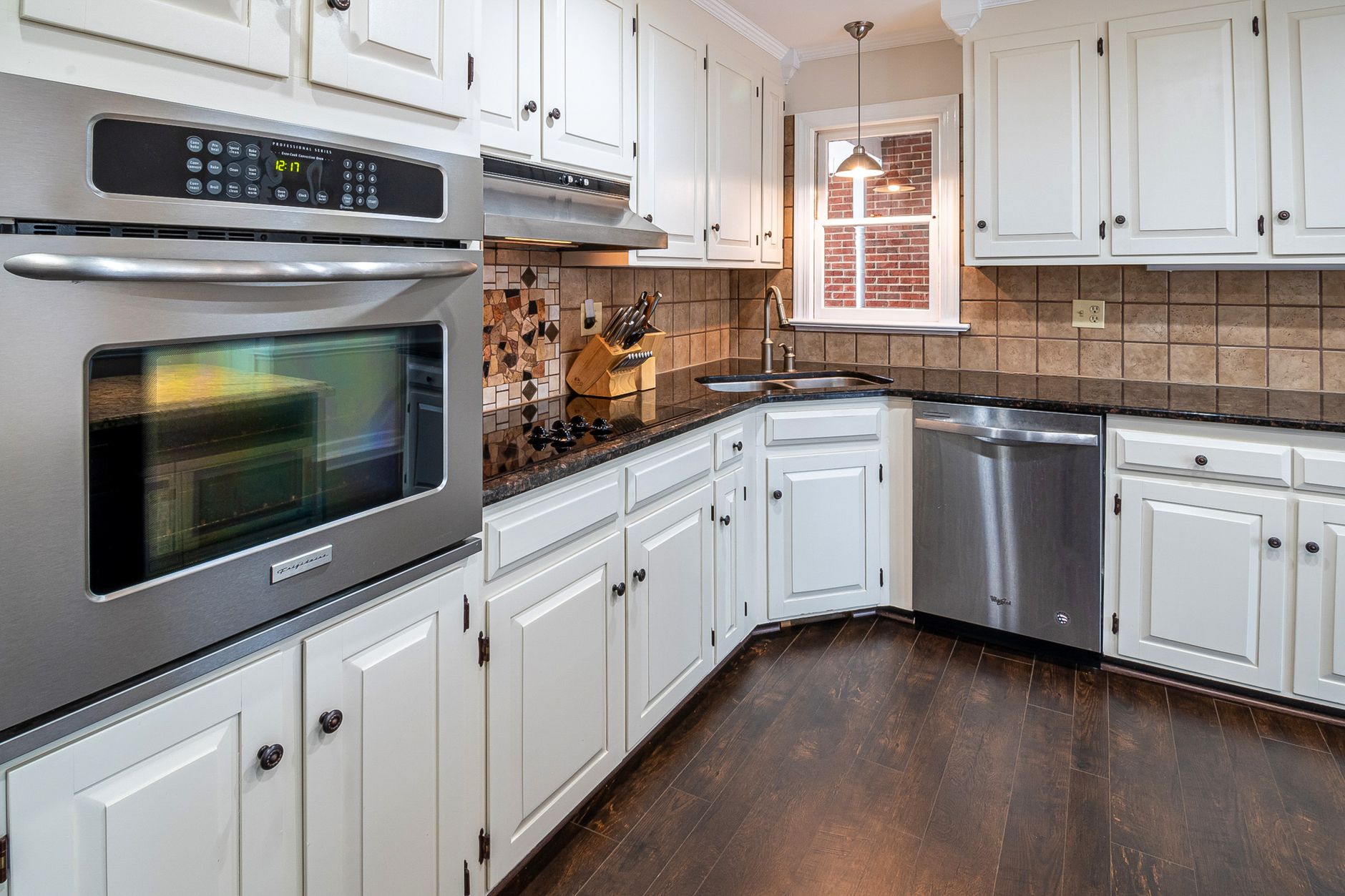
The right cabinet or vanity paint depends on the room’s moisture exposure and daily wear, not just the color you pick. Alkyd and waterborne alkyd enamels resist humidity and scuffing far better than standard latex, and semi-gloss or satin sheens hold up best against steam, splashes, and constant handling. Proper prep and primer matter just as much as the paint itself, especially in New Orleans homes where indoor humidity runs high for much of the year.
Homeowners constantly ask whether the paint that works on kitchen cabinets will hold up on a bathroom vanity. The honest answer is that it depends on the product, not the color swatch.
At Big Easy Painting, we know two rooms with very different moisture loads need two different approaches to the same painting job. This guide walks through the paint chemistry, sheen, and prep decisions that actually determine how long a cabinet or vanity finish lasts.
Contact us today to talk through your cabinet or vanity project before you buy a single can. Our team can point you toward the product that fits your room, not just your budget.
Every cabinet or vanity paint is built around a binder, and that binder decides how hard the finish gets and how well it shrugs off water. Latex, alkyd, and hybrid formulas all cure into different film structures, and that structure is what separates a coat that scuffs in a year from one that holds up for a decade.
Color and brand name matter far less than most homeowners assume. A premium latex in the wrong sheen can underperform a mid-range alkyd in the right one, especially in a household with kids, pets, or a bathroom that runs a hot shower daily.
Our painting team evaluates chemistry and sheen together for every cabinet and vanity job, because the two decisions work as a pair. Get one wrong and the other can’t fully compensate.
Start by being honest about how the room actually gets used, not how it looks on paper. A powder room with no shower behaves differently than a full bathroom with a glass enclosure running hot water daily.
Consider these exposure factors before choosing a product:
Our professional cabinet painting services start with this same assessment on every job, because it drives every product recommendation that follows.
Once you know the exposure level, match it to a paint chemistry built to handle it. The three main options for cabinets and vanities perform very differently once real humidity and daily handling enter the picture.
| Paint Type | Durability | Moisture Resistance | Best Use |
|---|---|---|---|
| Alkyd (Oil-Based) Enamel | Hardest, most scuff-resistant film | Excellent; sheds water well | High-traffic kitchens, busy vanities |
| Waterborne Alkyd / Hybrid Enamel | Close to oil-based hardness | Very good; lower odor, faster dry | Most kitchen and bath cabinet projects |
| Acrylic Enamel (Latex) | Flexible, resists cracking with wood movement | Good in premium cabinet-grade lines | Lower-traffic vanities, budget-conscious jobs |
Premium cabinet-grade lines from Sherwin-Williams and Benjamin Moore have narrowed the gap between latex and oil, but the general durability order above still holds true across most product tiers.
Chemistry sets the foundation, but sheen decides how the surface handles fingerprints, splashes, and cleaning. A flat or eggshell finish looks soft but fails fast on anything opened and closed daily.
Weigh these sheen options against how the piece gets used:
Most homeowners land on semi-gloss for anything near water, then reserve satin for cabinets in drier, lower-traffic rooms.
A kitchen and a bathroom stress paint in different ways, so the “best” product for one isn’t automatically the best for the other. Treating both rooms identically is the most common mistake we see in DIY projects.
Kitchen cabinets fight grease, heat near the range, and repeated food splatter, which calls for a film that wipes clean without dulling. Bathroom vanities fight standing humidity, direct water splash, and, in bathrooms without a fan, mold-friendly conditions between uses.
Across the New Orleans-area communities we serve, that humidity gap matters even more, since ambient moisture indoors runs higher for more of the year than in drier climates.
The primer has to match both the surface and the paint going over it, or even the best product will fail early. This step gets skipped more than any other on DIY cabinet jobs.
Follow this sequence based on the room:
Skipping any one of these steps shows up as peeling or bubbling within the first year, regardless of how good the paint itself is.
Dry to the touch and fully cured are two different things, and treating cabinets like they’re finished too early is what causes most early failures. Most cabinet and vanity paints need roughly 30 days to reach full hardness.
Keep these curing realities in mind before you resume normal use:
Patience during this window is what separates a finish that lasts years from one that needs touch-ups within months.
Picking the wrong chemistry or sheen is an easy mistake to make, and it’s usually the reason a “fresh paint job” looks tired again within a year. At Big Easy Painting, we match the product to the room before we ever pick up a brush, whether that’s a steamy full bathroom or a busy kitchen.
Call us today to walk through which paint type and finish makes sense for your cabinets and vanities. We’ll help you avoid the guesswork and get a finish built for how your home actually gets used.
A waterborne alkyd or hybrid enamel gives kitchen cabinets near-oil hardness with faster drying and less odor than traditional oil paint. It handles grease, heat, and daily handling better than standard latex, making it the most reliable pick for most cabinet-grade product lines.
Semi-gloss is generally the better choice for bathroom vanities because it sheds moisture and wipes clean more easily than satin. Satin still works well in drier, lower-traffic powder rooms without a shower running daily, where the added moisture resistance matters less.
The same chemistry can often work in both rooms, but the exposure level should still drive the final choice. A vanity facing daily shower steam needs the same moisture-resistant approach as a busy kitchen, even if the room looks different.
Alkyd (oil-based) enamel cures into a harder, more moisture-resistant film but has stronger odor and a longer cure time than acrylic. Acrylic enamel is more flexible and lower-odor, and premium cabinet-grade acrylic lines have narrowed the durability gap significantly over the last several years.
Most cabinet and vanity paints reach full cure in about 30 days, though light use is usually safe within 48 to 72 hours. Heavy daily use should wait at least one to two weeks to avoid marking the still-hardening finish.
High humidity slows the evaporation and curing process for water-based paints, which can extend the vulnerable window before a finish reaches full hardness. This matters more in bathrooms and homes without strong ventilation, since trapped moisture keeps the surface soft for longer than expected.
A moisture-resistant, non-porous sheen like semi-gloss naturally resists the conditions that encourage mold better than flatter finishes such as matte or eggshell. Some cabinet-grade lines also offer mildew-resistant additives worth asking about for bathrooms with limited airflow or frequent standing steam.
A properly chosen paint and sheen, applied over correct prep, typically holds up for several years before it needs a refresh. High-moisture vanities and heavily used kitchen cabinets tend to show wear sooner than lower-traffic pieces in guest bathrooms or formal dining rooms.
 By Admin
 As a homeowner, you understand that the exterior of your house is just as imp...
Read More
If you've ever been in the middle of a home decor project only to hit a wall ...
Read More
Painting a historic home in New Orleans means working inside two sets of rule...
Read More
Adding an accent wall to your home can be a great way to give it some cha...
Read More
Creating a beautiful and sustainable home is simpler than you might imagine, ...
Read More
Painting a room or your home can seem simple, but it’s easy to make mistakes ...
Read More
New Orleans, LA
