

 Aug 31, 2026
 Seasonal Painting Tips: Best Times of the Year for Painting in New Orleans, LA
-
 By Admin
Painting your home can be a great way to refresh its look and protect it from...
Read More

Call Us Now 504-608-2155
Painting a historic home in New Orleans means working inside two sets of rules at once: the preservation rules that decide what the city reviews, and the material rules that decide whether the paint stays on. The first set is narrower than most owners expect. The second is stricter than most crews admit.
Start with the fact that surprises people. The Historic District Landmarks Commission’s own guidelines state that it does not review paint colors or painting when the proposed work is limited to re-painting, and that in its full control districts all exterior work excluding paint color and plantings must be submitted for review. The city’s own FAQ puts it the same way for property inside a local historic district or at a landmark: a Certificate of Appropriateness is required for exterior work, including ordinary maintenance and repair, with the exception of repainting. Most maintenance and repair applications that do need review are handled at Staff level within 5 business days.
At Big Easy Painting, we repaint historic houses across the New Orleans metro, and we plan them around the surfaces and coatings the rules do care about rather than the color they do not.
If you own a historic home and want the repaint scoped against the current rules before anyone opens a can, contact us for a free quote.
The rules split into what the HDLC regulates and what it leaves to the owner, and the split depends on where the house sits. The HDLC has jurisdiction over any portion of a building or property that is visible from a public right-of-way, inside the local historic districts and at designated landmarks, with the widest reach in its full control districts. Within that jurisdiction, exterior work needs a Certificate of Appropriateness, the city’s approval document, before it starts. Partial control districts regulate less, so the first step on any job is confirming which district, if any, the address falls in.
Repainting is the named exception. A straight repaint of surfaces that are already painted, in whatever color the owner chooses, is not reviewed. The HDLC’s woodwork guidelines say it plainly: the commission requires that exterior woodwork be painted, but it does not regulate paint color. That is the whole reason a historic repaint can be scheduled like any other repaint, as long as it stays a repaint.
Where it stops being a repaint is the part that matters. Painting brick or stone that has never been painted, removing paint from masonry, replacing siding or trim, repairing rot, changing shutters, or altering anything that shows from the street moves the job into review. Most of those items are exactly what a neglected historic exterior needs before it can hold new paint, which is why the planning conversation matters more than the color conversation.
One district plays by its own rules. The French Quarter is governed by the Vieux Carre Commission, not the HDLC, and the city requires a paint permit for all outside painting affecting the exterior of any building on private property there, whether it is visible from the street or not. New colors must be approved by the VCC, applications include paint chips with the manufacturer, color name, number and gloss, and sealers, ceramic coatings, elastomeric coatings and waterproofing coatings are prohibited outright.
Most historic repaints in New Orleans involve at least one item on the review list, because the wood, masonry and trim on a century-old house are rarely in perfect shape when the painters arrive. Knowing which track the work falls on keeps the schedule honest.
 The HDLC’s reach is defined by visibility from a public right-of-way. Work on a rear elevation that cannot be seen from any street or sidewalk sits outside its jurisdiction, while the same work on the front facade sits inside it. On a typical New Orleans lot, that means the front and the visible side are reviewed and the back often is not. The exception again is the French Quarter, where the paint permit applies whether the surface is visible or not.
The HDLC sorts applications by the significance of the building and the scope of the work. Ordinary maintenance and repair items, which is where most repaint-related work lands, are reviewed by staff, and the FAQ states most of those are completed within 5 business days. Larger changes go to the commission. On the masonry side, the guidelines list repainting previously painted masonry or painting stucco as a Staff review, and painting previously unpainted brick or stone as a Staff review with the option of Commission appeal.
A maintenance and repair application is mostly documentation: what the surface is, what condition it is in, what is being repaired or replaced, and how. For a repaint that includes rot repair or replaced trim, the guidelines want replacement to match the original in profile and material. Getting that paperwork right is a scheduling task, not a design task, and it is the reason we scope the repair list before the paint list on every historic job.
The preservation guidelines are far more interested in materials than in color, and three positions come up on nearly every historic exterior.
Unpainted masonry stays unpainted. The masonry guidelines discourage painting previously unpainted historic brick or stone because paint can damage the masonry, alter the visual character of the building, obscure the craftsmanship of the joints and texture, and is not easily reversed. If a brick facade has never carried paint, the answer to “can we just paint it” is a review, and the guidelines discourage it.
Coatings have to breathe. The same chapter discourages waterproof coatings, including paint, that trap moisture and stop a wall from breathing, and points to lime-based masonry paint for a uniform appearance after repairs. The French Quarter permit goes further and prohibits elastomeric and waterproofing coatings entirely. On a wall built of soft historic brick and lime mortar, trapped moisture is the failure that removes the face of the brick, so this is a durability rule as much as a preservation rule.
Woodwork must be painted, and the paint is the protection. The woodwork guidelines are explicit that exterior woodwork is required to be painted, that wood generally needs repainting every 5 to 8 years, and that peeling paint is treated as a sign of a moisture problem rather than a cosmetic one. The maintenance chapter adds that paint failures near roofs, downspouts and porch ceilings are often drainage problems. Vinyl or aluminum siding over that woodwork is discouraged because it hides rot and traps moisture behind it.
This is the set of rules the HDLC writes as guidance rather than approval, and it lines up almost exactly with how a durable exterior painting job is run in this climate anyway.
The guidelines say to address any moisture or deterioration problems prior to painting, and to review drainage, leaks and the vapor barrier wherever paint is peeling, curling, crazing or blistering. A coat applied over a damp board or a wall with a hidden leak will fail on the same schedule the old coat did. Paint manufacturers such as Benjamin Moore put the working rule for the day itself at a surface more than 5 degrees Fahrenheit above the dew point, which sets a short window on humid mornings.
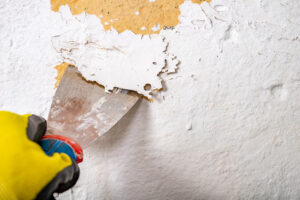 The woodwork chapter calls for hand scraping and sanding where possible to avoid removing or damaging decorative details, removing flaking paint only to sound paint, and treating complete paint removal as a last resort because many stripping tools and chemicals are hazardous and can damage historic materials. The maintenance chapter adds that high pressure water should not be used on siding, and that cleaning is done with low pressure water, a gentle detergent and a natural bristle brush, which is the difference explained in our note on pressure washing versus soft washing.
A federal rule sits on top of this. Under the EPA’s Renovation, Repair and Painting program, firms paid to perform work that disturbs painted surfaces in a home built before 1978 must be EPA certified, with the work done by trained personnel using lead-safe practices, subject to the rule’s own exemptions. The HDLC describes the city’s historic housing stock as early 19th through mid 20th century buildings, so nearly all of it predates 1978 and scraping on those houses falls under the rule.
The sequence in the guidelines is clean, scrape and sand, putty or caulk the open joints and countersunk nails, let the substrate dry, spot-prime bare wood including cut ends, then repaint with a high quality product applied to the manufacturer’s recommendations. One detail trips up rushed jobs: the guidelines note that finish paint should go on soon after an oil primer, because surface compounds that affect adhesion can form within two weeks. Our own surface preparation process follows that order, and color itself is settled separately through our paint color selection service, since the rules leave that choice to you.
The preservation rules ask less of a repaint than most owners fear and more of the preparation than most crews deliver. Color is yours to choose outside the French Quarter. What the city and the material both care about is that unpainted masonry stays bare, coatings breathe, woodwork stays painted, moisture is solved before the primer goes on, and lead-safe practice is followed on anything built before 1978.
The practical order is the same on every historic job: walk the exterior and list the repairs, sort the list into what needs a Certificate of Appropriateness and what does not, file the maintenance items for Staff review, then schedule the repaint behind the repairs. Handled in that order, the approval rarely holds up the painters.
At Big Easy Painting, we scope historic repaints in that order across the New Orleans metro and give you the repair list and the paint list as one plan. Call us today at (504) 608-2155 for a free quote on your historic home.
Not for a repaint alone. The HDLC guidelines state that the commission does not review paint colors or painting when the work is limited to re-painting, and the city’s FAQ lists repainting as the exception to the Certificate of Appropriateness requirement for property in a local historic district. Approval is needed when the job includes anything beyond repainting, such as painting unpainted brick, replacing trim or siding, or repairing rot on a surface visible from the street.
No. The exterior woodwork guidelines say the HDLC requires woodwork to be painted but does not regulate paint color, and the introduction lists paint color alongside plantings as work that does not need to be submitted even in full control districts. The one place color is regulated is the French Quarter, where the Vieux Carre Commission approves new colors through the paint permit.
The French Quarter is under the Vieux Carre Commission rather than the HDLC, and the city requires a paint permit for all outside painting affecting the exterior of any building on private property there, visible from the street or not. The application includes photographs and paint chips with manufacturer, color name, number and gloss, new colors must be approved, and sealers, ceramic, elastomeric and waterproofing coatings are prohibited.
If the brick has never been painted, the masonry guidelines discourage it and treat it as a reviewed item, because paint can damage historic masonry, hide the craftsmanship, and is hard to reverse. If the brick is already painted, repainting it is a Staff review, and the guidelines steer toward breathable coatings such as lime-based masonry paint rather than waterproof products that trap moisture in the wall.
The HDLC FAQ states that most applications for maintenance and repair are reviewed at the Staff level and completed within 5 business days. Larger alterations that go to the commission take longer because they follow the meeting calendar. Filing the repair items early, before the paint crew is scheduled, is the simplest way to keep the timeline intact.
Because on a wood house it usually is one. The maintenance guidelines list peeling, curling, crazing and blistering as possible signs of a moisture problem and direct owners to review drainage, leaks and the vapor barrier, noting that failures near roofs, downspouts and porch ceilings are often drainage related. Repainting without fixing the source puts the new coat on the same failure schedule as the old one.
The maintenance guidelines say not to use high pressure water on siding because it can cause more significant problems, and recommend cleaning with low pressure water, a gentle detergent and a natural bristle brush. Sandblasting and harsh chemicals are discouraged on masonry for the same reason. Soft washing at low pressure is the method that fits both the rules and the material.
Under the EPA’s Renovation, Repair and Painting rule, firms paid to disturb painted surfaces in a home built before 1978 must be EPA certified and use trained personnel and lead-safe practices, subject to the rule’s exemptions. Scraping and sanding a historic exterior disturbs old paint by definition, so the rule applies to most historic repaints in New Orleans.
 By Admin
 Painting your home can be a great way to refresh its look and protect it from...
Read More
When it comes to decorating a small room, one of the biggest challenges is cr...
Read More
Are you considering a home makeover? If so, one of the most important decisio...
Read More
The best exterior paint for New Orleans homes pairs a 100% acrylic latex base...
Read More
Switching an existing wall color is one of the fastest, most affordable ways ...
Read More
Having freshly painted walls is probably one of the most exciting things you ...
Read More
New Orleans, LA
